Join us here at the Lukens Executive Office Building as we watch a nationally broadcast monthly talk presented by the Iron and Steel Heritage Forum.
Steve Walton & Arron Kotlensky will be discussing the West Point Foundry.
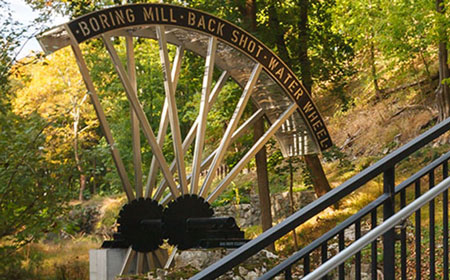
From its beginnings in 1817 through the Civil War, the West Point Foundry of Cold Spring, New York stood out as a pioneer of heavy industry capable of making ordnance and durable goods that only a few peers could match. Envisioned as a producer of cannon for the U.S. Navy in the years after the War of 1812, the foundry’s deft leadership, supported by a highly skilled workforce, gained a reputation for producing not only large quantities of cannon year after year but also a wide range of durable, capital-intensive goods, such as steam engines and machinery for other industries. The West Point Foundry’s success lead to its steady expansion in a narrow valley that offered ample water power and the nearby Hudson River for waterborne transport. Though gaining its greatest share of national attention during the Civil War, the foundry’s success waned in the closing decades of the nineteenth century—with a dramatic loss in revenue owing to the Panic of 1907, the final owners of the foundry closed its operation in 1911 for good. Following years of salvage and decay, with nature taking root amongst its ruins, interest in the site of the West Point Foundry grew with its purchase by Scenic Hudson Land Trust in 1996, followed by eight years of intensive archaeological investigations undertaken by Michigan Technological University from 2001 to 2008. Building on years of hard-won research, Scenic Hudson developed the site into a passive preserve that visitors can visit today and appreciate through interpretive kiosks and reconstructed features set in a wooded landscape.